SA AIA / Public safety guidance / Summer 2026–27

Adventure
in the Heat.

Understanding the risks.
Planning responsibly. Exploring safely.

South Africa offers extraordinary outdoor experiences. Changing weather calls for thoughtful planning. Whether you're booking an adventure, guiding a group or organising a youth or school trip, understanding heat helps everyone make better decisions.

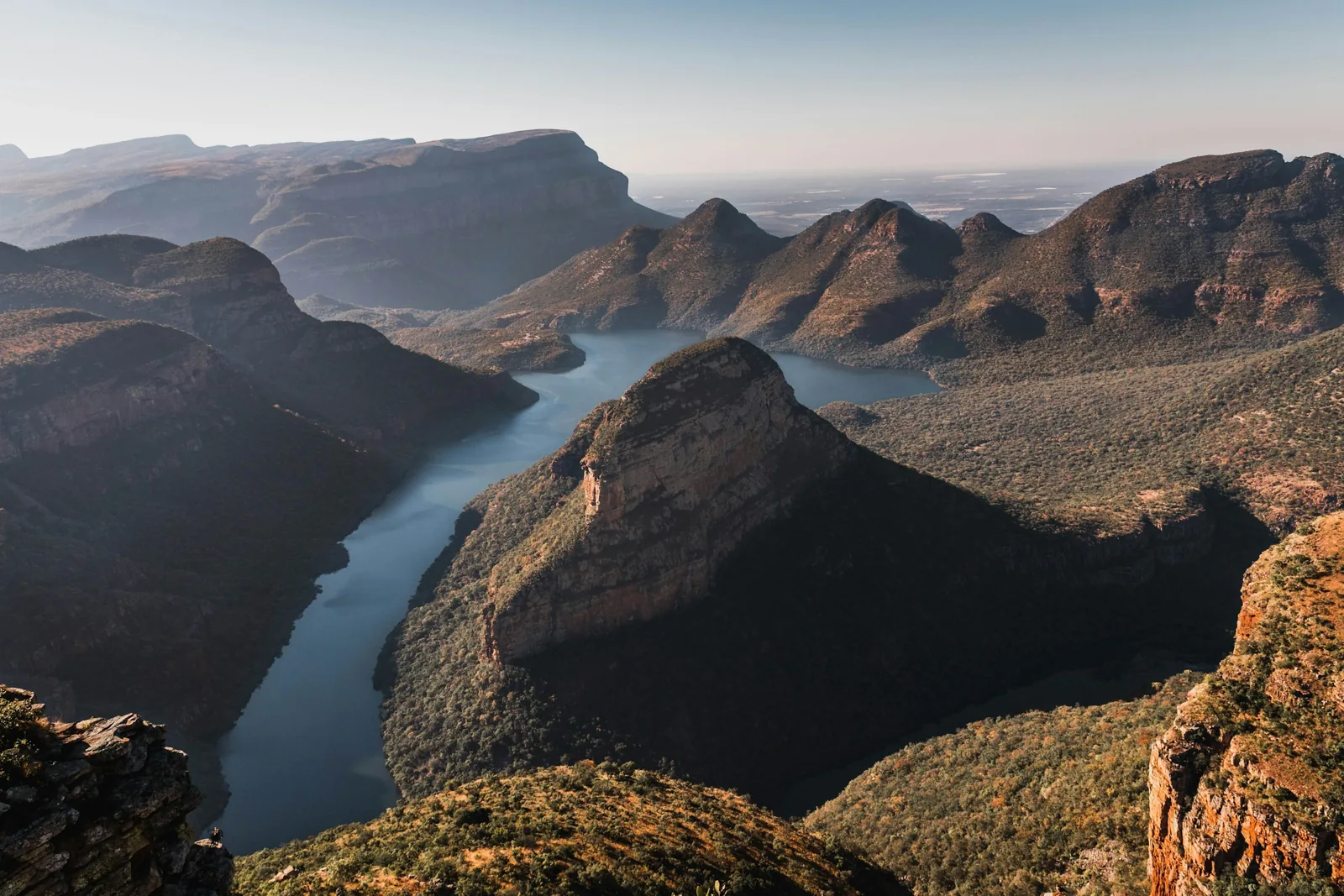
The river winds between steep, sunlit cliffs in Blyde River Canyon, Mpumalanga.
Blyde River Canyon, Mpumalanga · Photo: Asher Pardey / Unsplash (opens in a new tab)
For every kind of outdoor adventureFree to read. Free to share. Open to everyone.Download safety resources ↓
Dated seasonal outlook · Not a live alert

2026/27 Summer
Outlook: El Niño

Last reviewed:
Read together with local forecasts and official warnings.

Check the latest with SAWS (opens in a new tab)

Pacific outlook · NOAA bulletin, 8 October 2026

NOAA reports that El Niño is strengthening, with strong-to-very strong conditions likely to persist through January–March 2027. This describes the Pacific climate pattern, not the weather for your activity. NOAA bulletin (opens in a new tab)

A Department of Agriculture advisory published on 2 September 2026, citing SAWS' 31 August Seasonal Climate Watch, highlighted the potential for below-normal summer rainfall and high temperatures. This is dated context; consult SAWS for its latest local outlook. Government advisory (opens in a new tab)

Possibility, not certainty. El Niño often raises the likelihood of hotter or drier conditions in parts of southern Africa. Local outcomes vary; a seasonal tendency does not rule out storms, flooding or cool days.

The science, simply

A Pacific pattern.
A global influence.

How El Niño connects ocean and atmosphereWhen Pacific trade winds weaken, warm surface water extends eastward. Rising air and rainfall shift, changing large-scale atmospheric circulation. This is a simplified schematic, not a forecast.WESTERN PACIFICEASTERN PACIFICWarmer surface water extends east →Weaker trade windsRising air & rainfall shift

Simplified illustration of El Niño ocean–atmosphere coupling. Not to scale and not a map or forecast. Based on NOAA's ENSO explanation (opens in a new tab).

Context Established science

Understand the
bigger picture.

What is El Niño, and how does it form?

El Niño is the warm phase of the El Niño–Southern Oscillation (ENSO). As Pacific trade winds weaken, warmer surface water extends eastward. The ocean and atmosphere respond together, shifting tropical rainfall and circulation patterns. La Niña is the cool phase; neutral conditions sit between them. Source: NOAA (opens in a new tab).

Why can South Africa feel the effects?

Changes in atmospheric circulation influence weather far beyond the Pacific. During El Niño, parts of southern Africa tend towards warmer and drier summer conditions. This changes the odds, rather than deciding the outcome for every place or day. Source: NOAA CPC (opens in a new tab).

Is El Niño the same as climate change?

No. ENSO is a naturally occurring pattern that varies over time. Climate change is a longer-term shift in the climate, including warming driven by greenhouse gas emissions. Their effects can overlap. Neither the ENSO label nor a seasonal forecast replaces a local weather assessment. Source: NASA (opens in a new tab).

01 A question worth asking

Why does my
adventure start
so early?

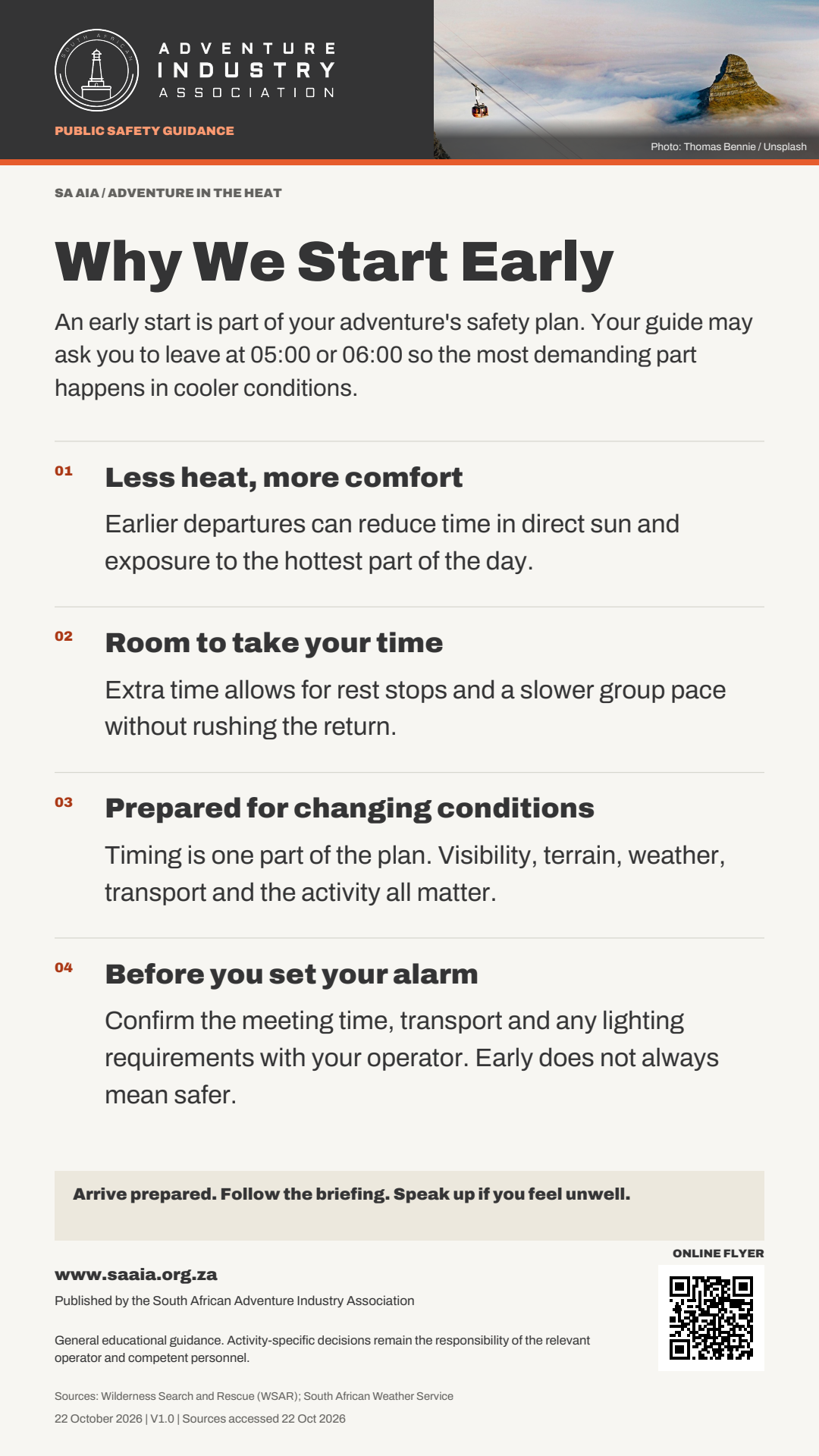
That 05:00 alarm can be part of a thoughtful safety plan.

Your guide may schedule the most demanding part of an activity for cooler conditions. An early departure can mean:

  1. Less exposure to the hottest part of the day and direct sunlight.
  2. A more comfortable pace, with time for suitable rest stops.
  3. A greater time margin if the group moves more slowly or conditions change.

Earlier is not automatically safer. Visibility, terrain, weather, transport and activity-specific risks must shape the decision. Planning reference (opens in a new tab).

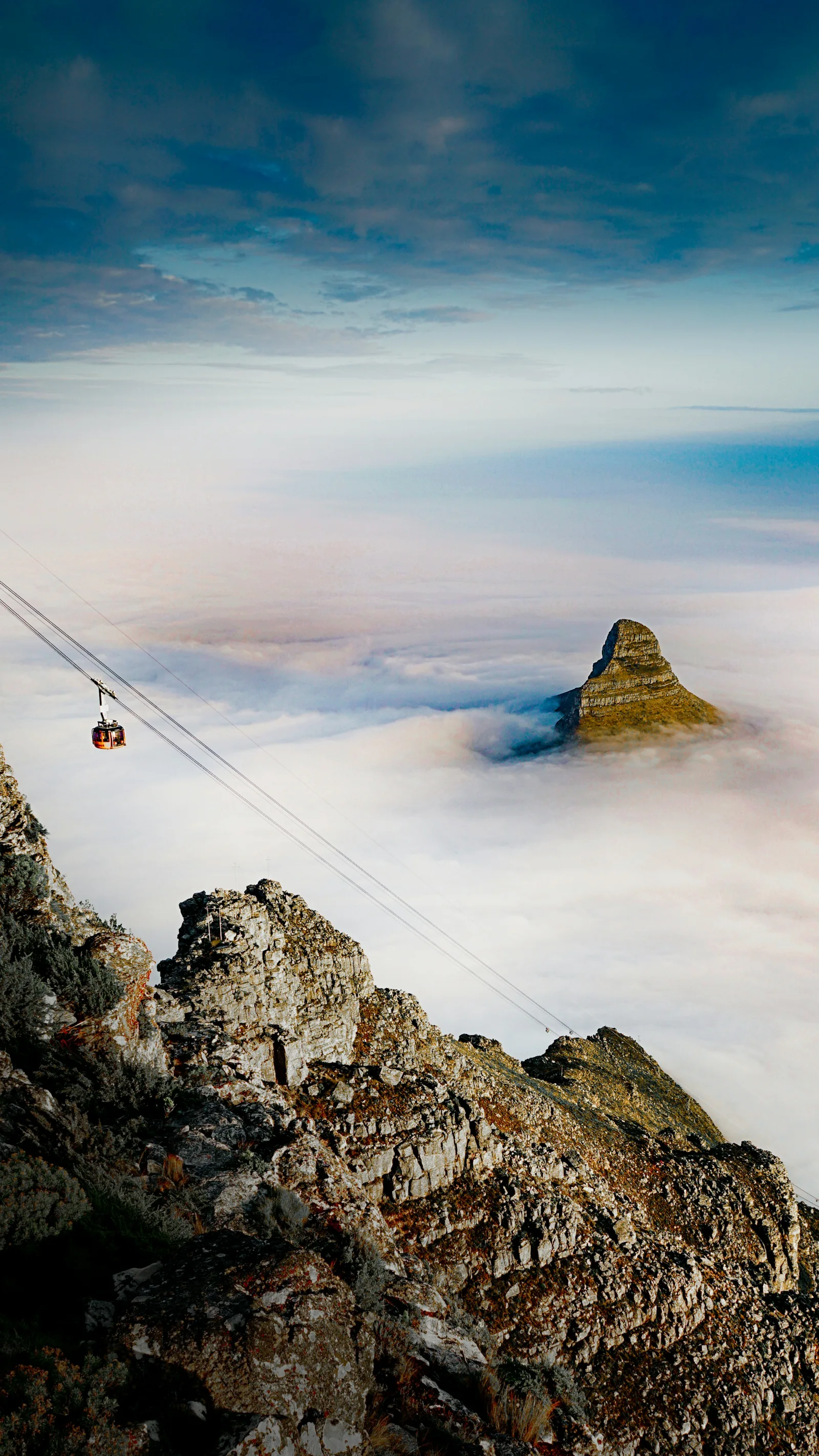
Morning light on Lion’s Head above low clouds, viewed from Table Mountain in Cape Town.
A little earlier. More time to take it in.Sunrise from Table Mountain, Cape Town · Photo: Thomas Bennie / Unsplash (opens in a new tab)

02 For guests & families

Pack well.
Feel ready.

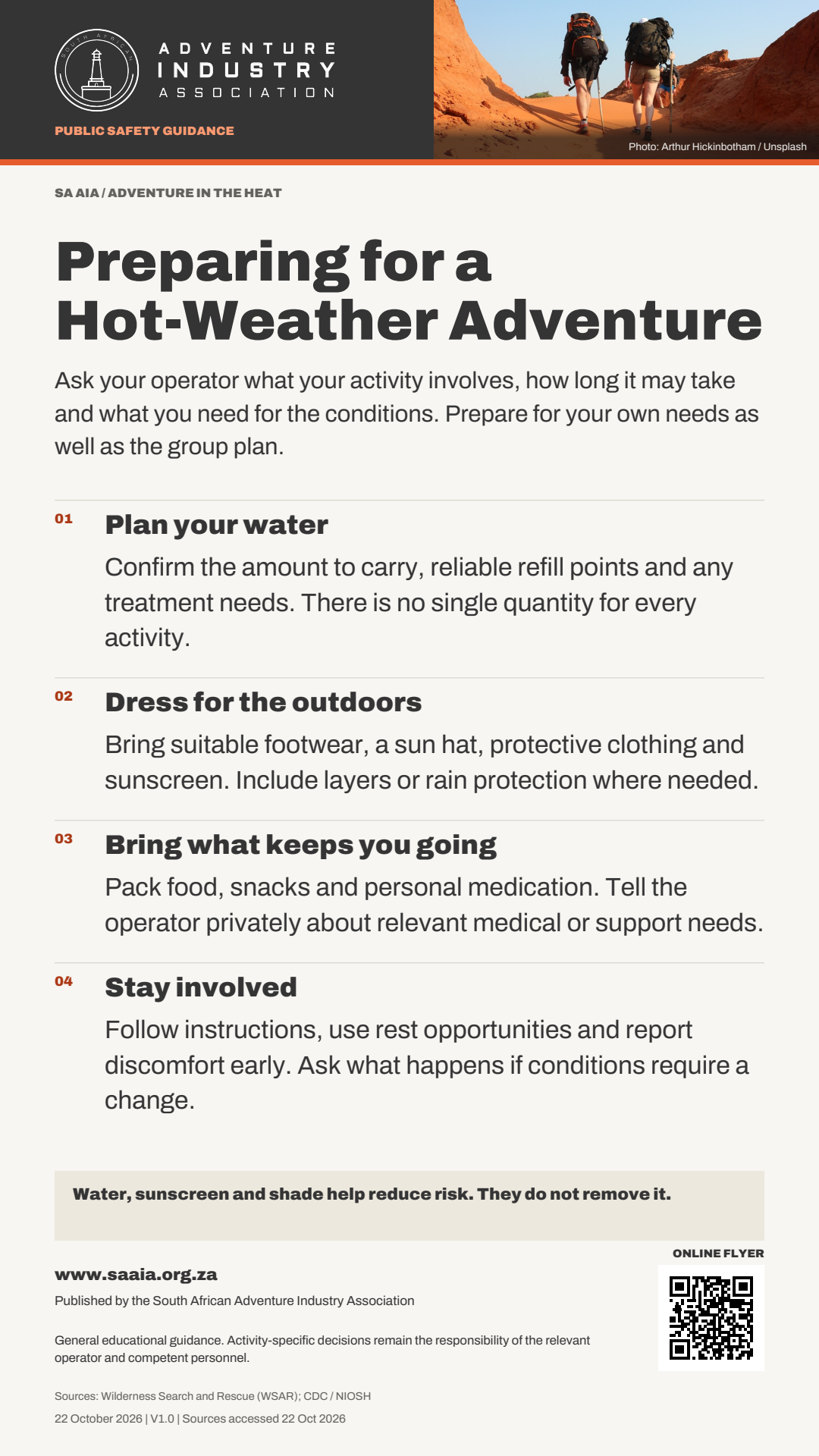
A few practical steps help you get more from your day outdoors.

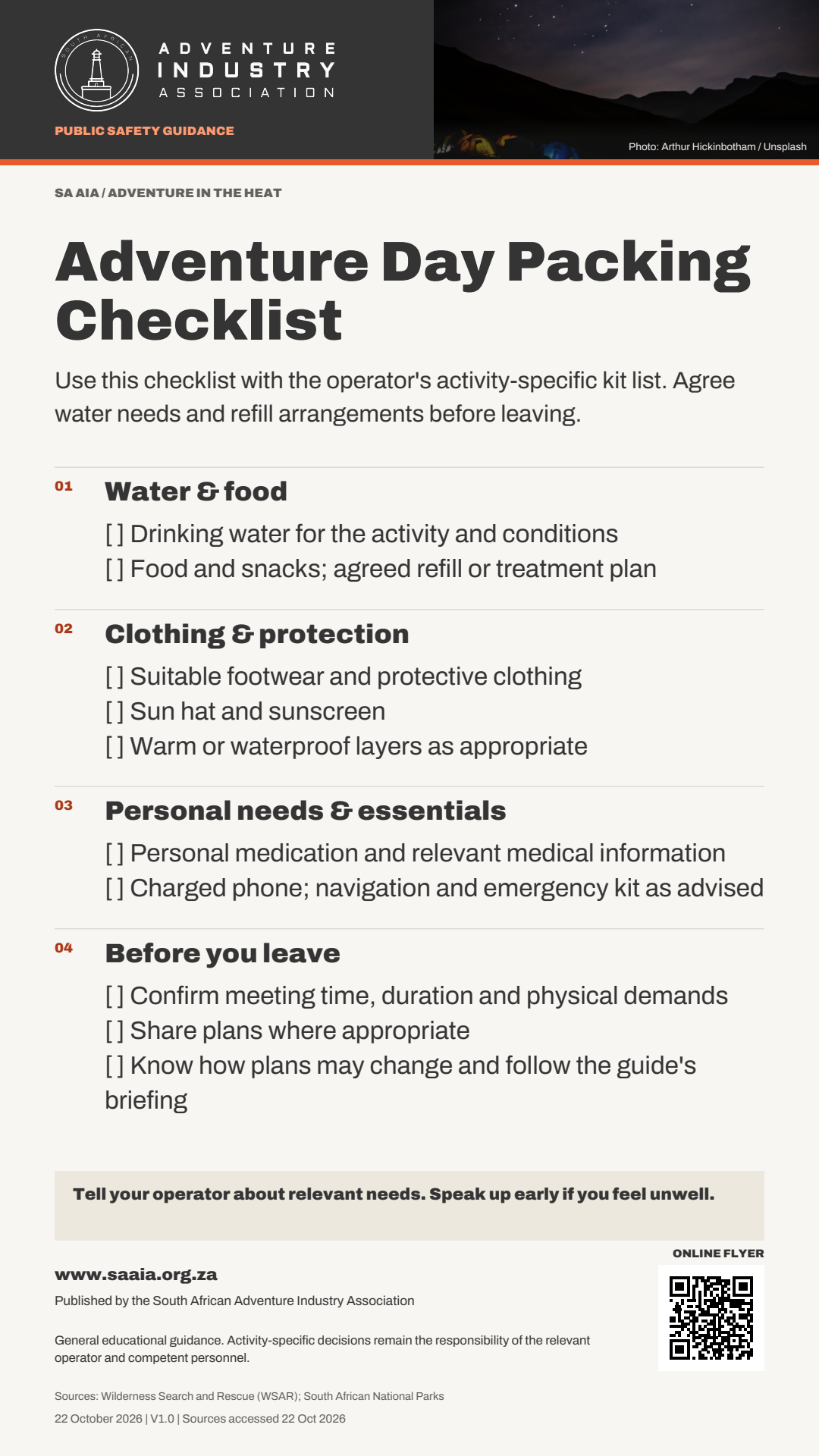
Use this checklist with your operator's kit list. Water needs vary with the activity, duration, weather and individual. Agree a plan; do not rely on one universal quantity.

Tick as you prepare. Choices stay on this device when browser storage is available. No personal or medical information is collected.

Open the packing checklist ↗ (opens in a new tab)

0 of 7 prepared

General educational guidance. Activity-specific decisions remain the responsibility of the relevant operator and competent personnel.

03 Recognise & respond

Know the signs.
Look out for
each other.

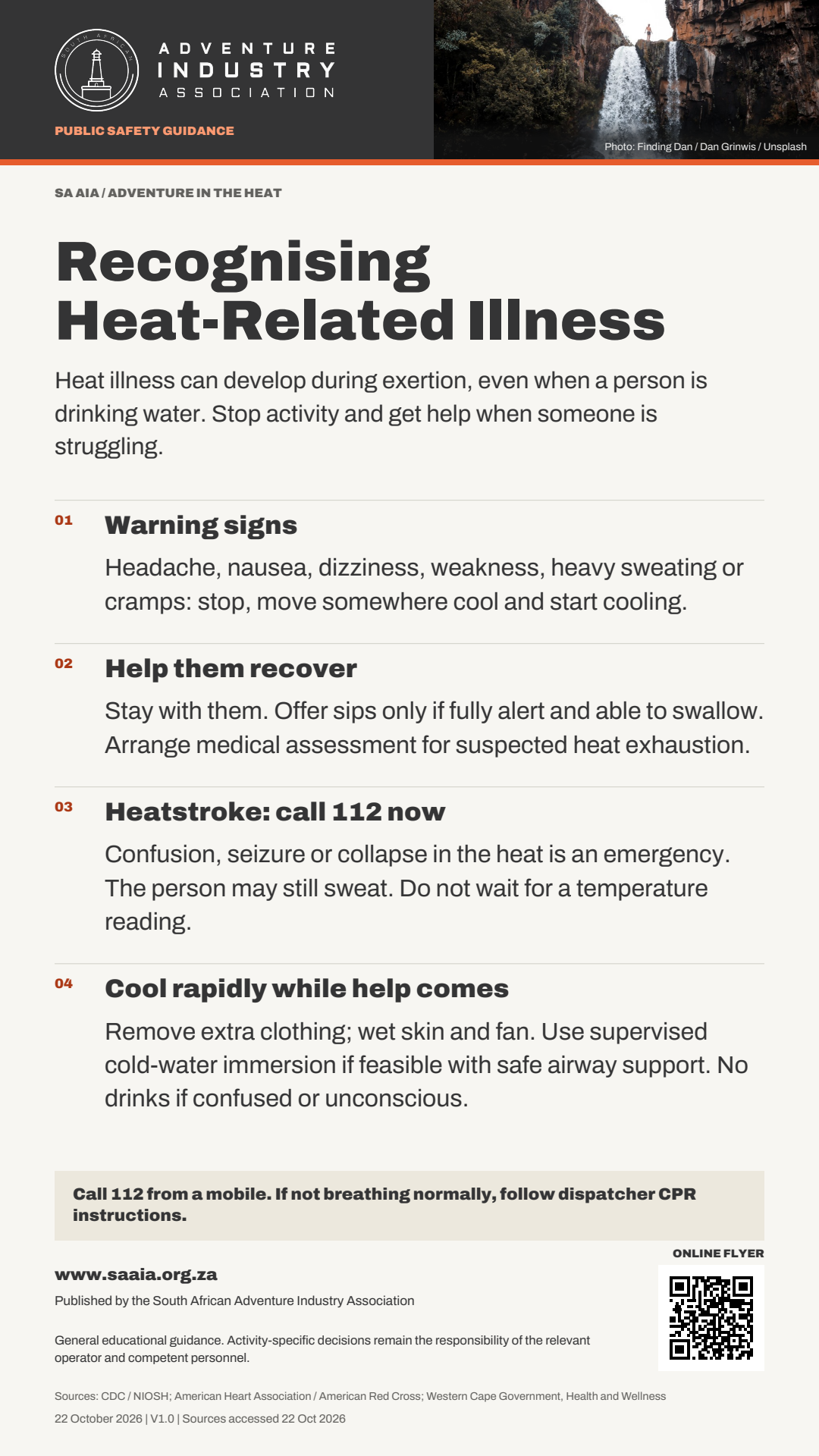
Heat can affect physical performance and judgement before someone realises they are struggling.

Slow down, stop and tell your guide early. Water, sunscreen and shade help reduce risk; none makes heat exposure harmless. This information supports first aid awareness and does not diagnose illness.

Keep the heat illness reference ↗ (opens in a new tab)
Fluid loss

Dehydration

Thirst, a dry mouth, dark urine or urinating less can indicate fluid loss. Dizziness and tiredness may follow.

Rest somewhere cool. Take small sips if fully alert and able to swallow. Persistent symptoms need medical advice; confusion or difficulty waking needs emergency help. NHS guidance (opens in a new tab).

Stop & recover

Heat cramps

Painful muscle spasms during or after exertion can occur with heavy sweating.

Stop and cool down. If alert, drink water and have a snack or an electrolyte drink. Avoid salt tablets. Get medical advice for persistent cramps or relevant medical conditions. NIOSH guidance (opens in a new tab).

Stop & seek medical care

Heat exhaustion

Headache, nausea, dizziness, unusual weakness and heavy sweating are warning signs.

Stop activity, move to a cool place, remove extra clothing and cool the skin. Stay with the person. Offer small sips only if alert and able to swallow, and arrange medical assessment. Escalate immediately if they worsen. NIOSH guidance (opens in a new tab).

Medical emergency

Suspect heatstroke?
Call for help.
Start cooling.

Confusion, a seizure or collapse in the heat can signal heatstroke. Skin may be dry or still sweating. Do not wait for a temperature reading.

112 from a mobile in South Africa
  1. Call emergency services immediately. Give your location and follow dispatcher instructions.
  2. Cool rapidly while help is coming. Move to a cooler place if safe and remove extra clothing. Wet the skin and fan; apply cold wet cloths. Cold-water immersion is effective if feasible with safe supervision and support to keep the airway clear.
  3. Stay with the person. Give nothing by mouth if confused, unconscious or unable to swallow safely. Monitor breathing; if they are not breathing normally, follow dispatcher CPR instructions.

First response: CDC / NIOSH (opens in a new tab) and AHA / American Red Cross 2024 (opens in a new tab). Emergency access checked against Western Cape Government (opens in a new tab) on 22 October 2026. A call may not connect without network coverage.

Sunburn is a separate risk.

UV exposure can damage skin even when it feels cool. Get out of the sun, cool affected skin with a cool shower or damp towel and cover it. Blistering, swelling or feeling unwell warrants medical advice. A change in skin colour may be less visible on darker skin. NHS sunburn guidance (opens in a new tab).

Changes in pace are information.

Unexpected fatigue, loss of coordination or difficulty following instructions deserve attention. Do not dismiss them as lack of fitness. Pause, check the person and conditions, and use the group's emergency arrangements if needed. Further heat illness guidance (opens in a new tab).

04 Good adventures adapt

A change of plan
can be a sign
of good guiding.

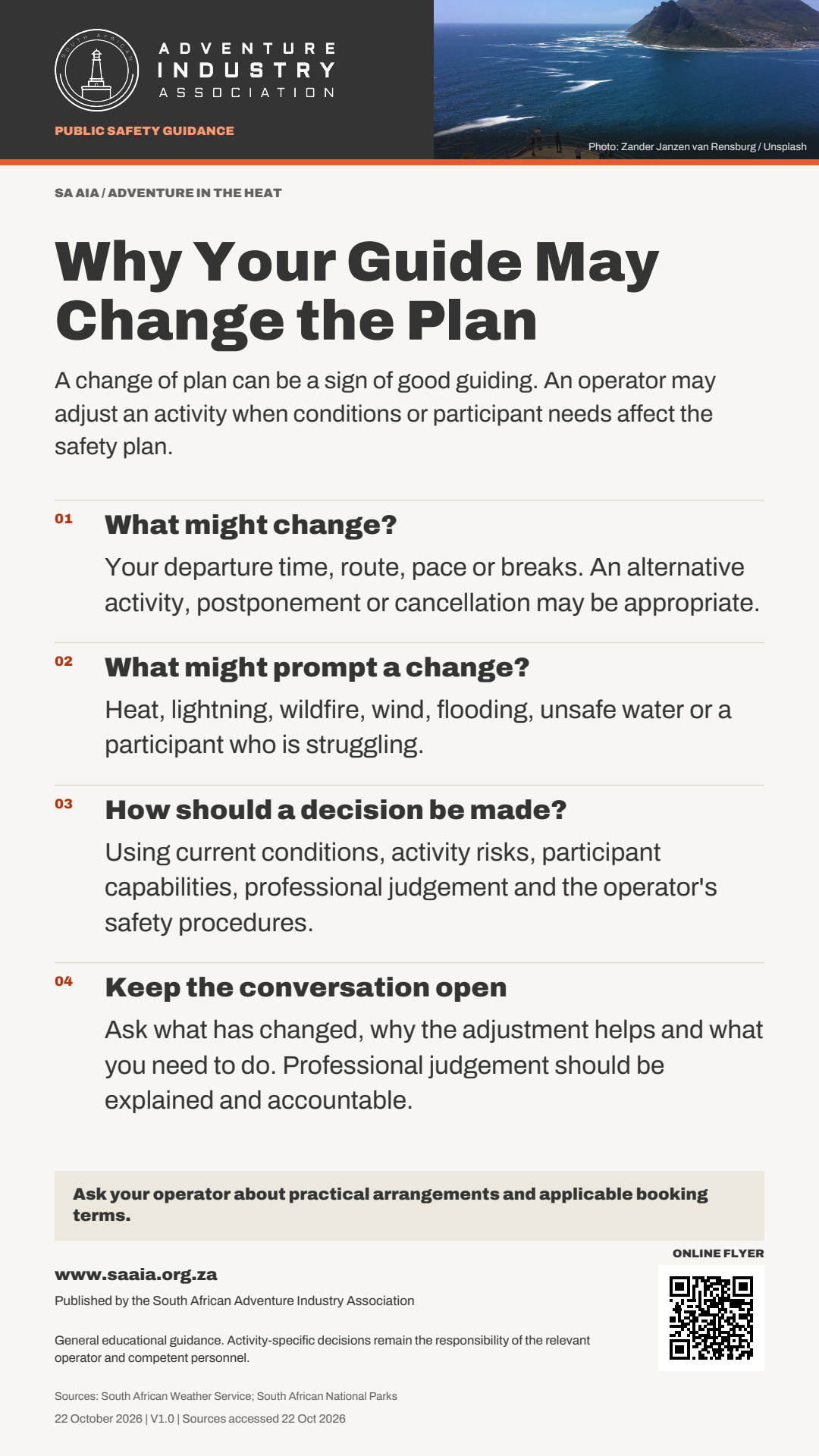
The destination matters. So does responding well to what is happening along the way.

A guide may change the start time, shorten a route, add breaks or choose another activity. Sometimes postponing or cancelling is the responsible decision.

Extreme heatLightningFire dangerStrong windsFloodingUnsafe waterParticipant wellbeing

Expect a reasoned explanation.

Decisions should reflect the activity, current conditions, participant capabilities, professional judgement and the operator's safety procedures. Preparation reference ↗ (opens in a new tab)

Ask what has changed, why an adjustment helps and what it means for you. Professional judgement should remain accountable; this guidance does not endorse every decision automatically.

Booking arrangements, refunds and alternatives depend on the terms applicable to your booking. Ask the operator for details.

Why Your Guide May Change the Plan ↗ (opens in a new tab)

For guides & operators

Plan the day.
Keep reviewing it.

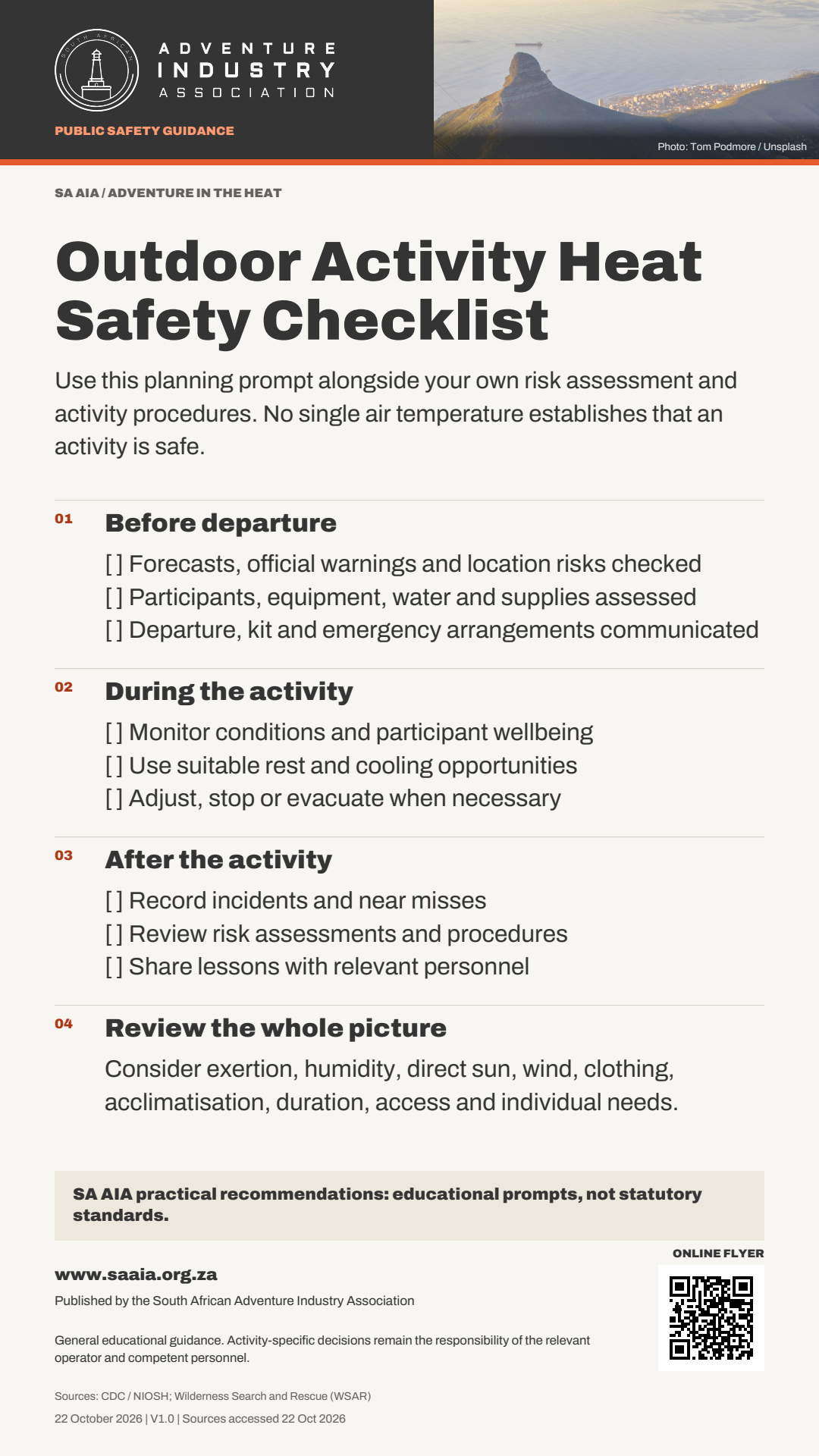
Use these practical prompts alongside your own activity-specific procedures.

Air temperature alone cannot determine whether an activity is safe. Consider exertion, humidity, sun, wind, clothing, acclimatisation, duration, access and individual needs. These are SA AIA recommendations, not legal requirements or statutory standards.

Open the operator checklist ↗ (opens in a new tab)

Before the activity

0 of 6 prepared

02 / Keep observing

During the activity

  • Monitor weather, environmental conditions and the group's pace.
  • Watch for distress; create opportunities for participants to speak up.
  • Use suitable rest, shade and cooling opportunities.
  • Adjust the plan, stop or evacuate when necessary.

03 / Learn from the day

After the activity

  • Record incidents and near misses.
  • Review the risk assessment and response.
  • Improve the next briefing and future planning.
  • Communicate relevant lessons with your team.

Planning context: WSAR (opens in a new tab), NIOSH (opens in a new tab) and SAWS (opens in a new tab). Apply competent judgement to your activity and setting.

For schools, youth groups, parents & outdoor educators

More learning.
Thoughtful care.

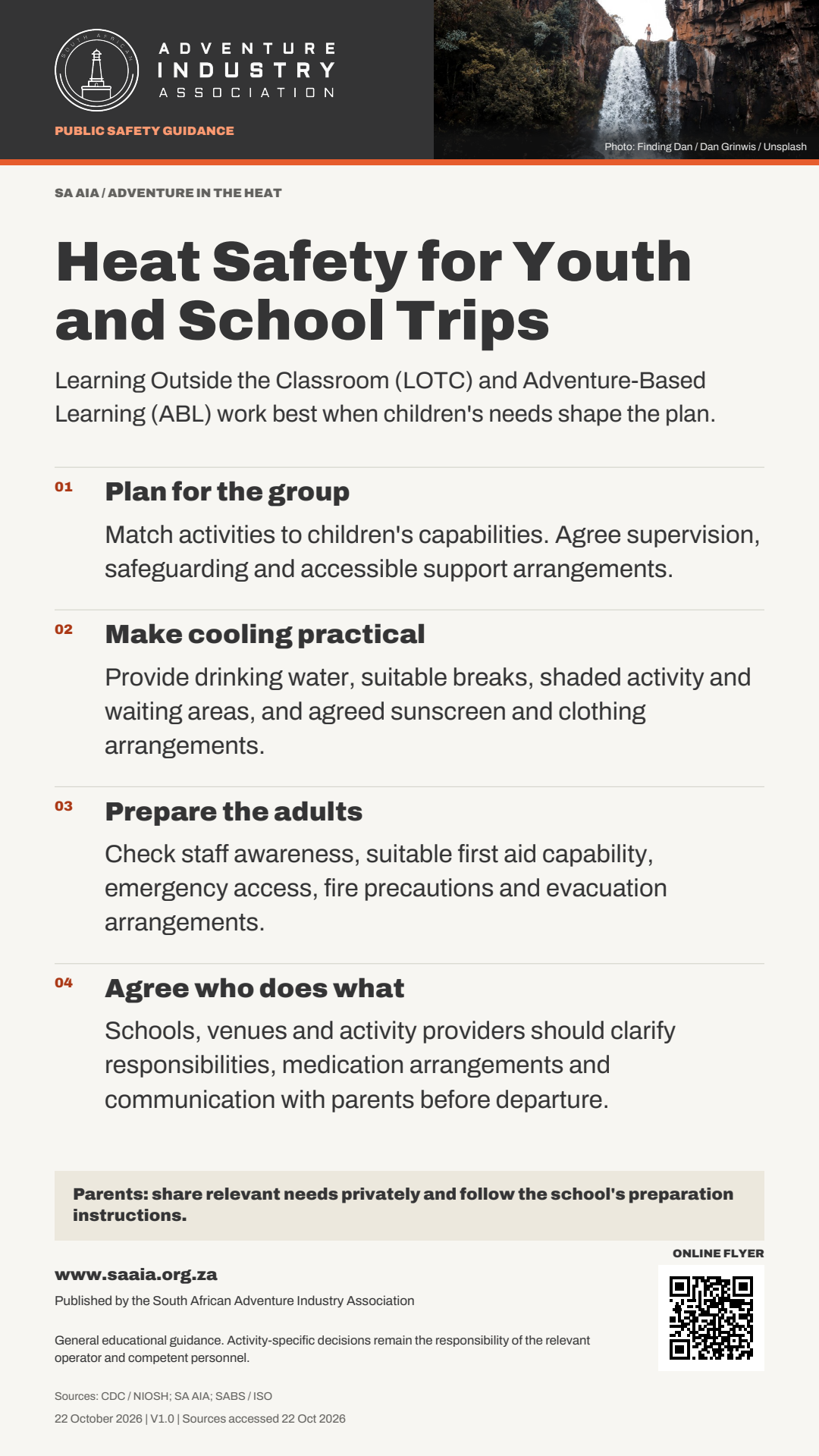
Children's needs should shape the outdoor learning plan.

Learning Outside the Classroom (LOTC) and Adventure-Based Learning (ABL) can open up valuable experiences. Plan heat exposure, supervision and support as part of the whole excursion.

Heat Safety for Youth and School Trips flyer ↗ (opens in a new tab)

Match the experience

Consider age, capabilities, medical needs and acclimatisation. Make accessible arrangements for children needing additional support.

Make breaks work

Plan water access, shade and waiting areas. Agree sun protection, sunscreen support and appropriate clothing arrangements.

Prepare the team

Confirm supervision, safeguarding, staff awareness and suitable first aid capability. Brief the Emergency Action Plan, fire prevention and evacuation roles.

Talk before departure

Explain preparation to schools and parents. Agree medication, contact and escalation arrangements and how changes will be communicated.

Clarify responsibilities together. Venues, schools and activity providers may hold different responsibilities. Agree these before the excursion. SA AIA membership or verification is not a legal prerequisite for an excursion. SA AIA school-trip safety guidance (opens in a new tab); heat awareness reference (opens in a new tab).

For every outdoor adventure

Safety & emergencies

Fire readiness, emergency contacts and a clear plan for everyone heading outdoors.

Fire & environmental readiness

Care for the place.
Prepare to leave.

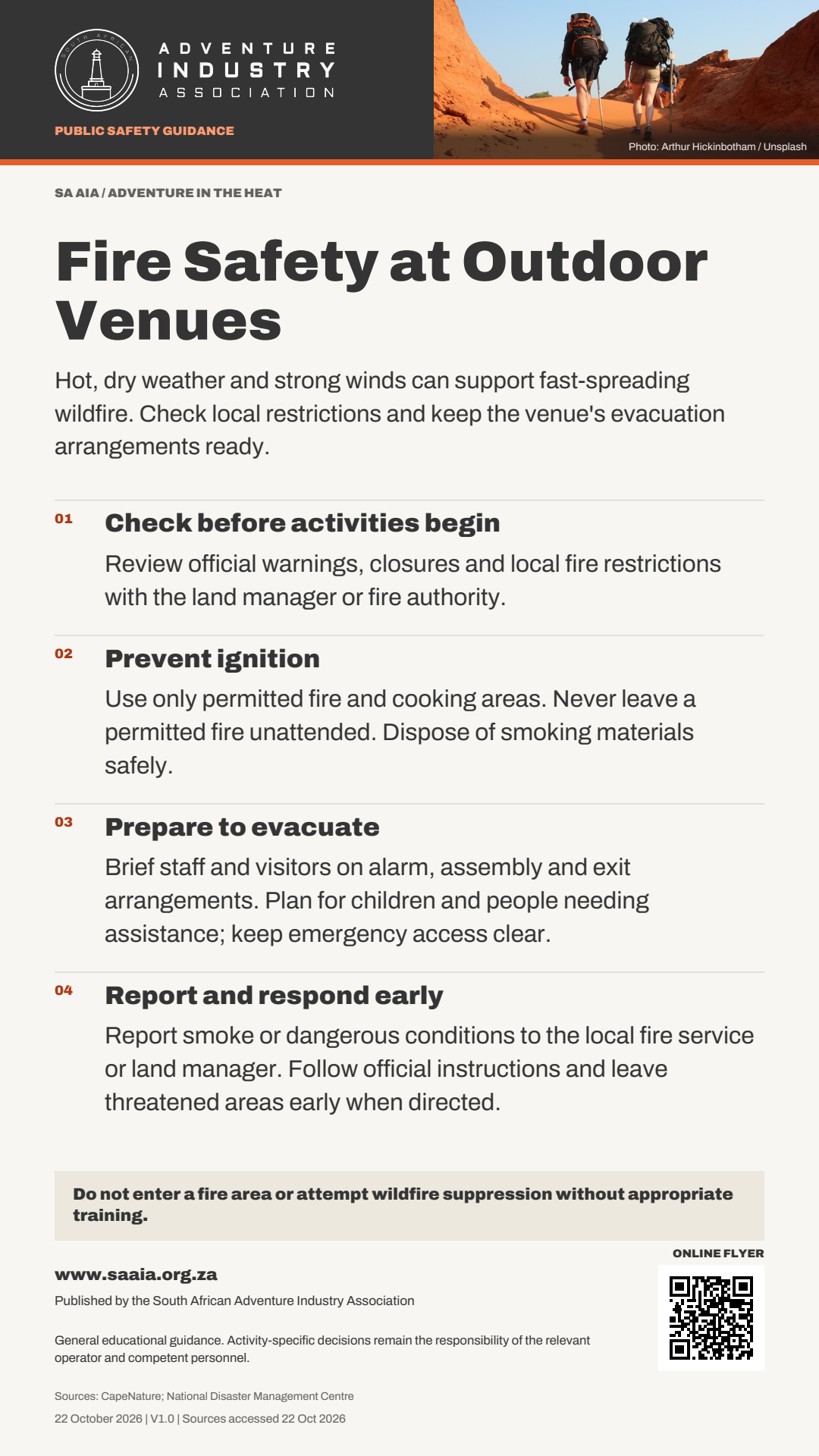
Hot, dry weather and strong winds can increase wildfire risk. Plan ahead with the local land manager or fire authority.

  • Check fire restrictions, warnings, closures and evacuation routes.
  • Use permitted cooking areas only; never leave a permitted fire unattended. Dispose of smoking materials safely.
  • Know the alarm, assembly point and exit arrangements; plan assistance for anyone who needs it.
  • Report smoke or dangerous conditions promptly. Follow official instructions and leave threatened areas early when directed.
  • Use water responsibly while protecting drinking supplies, keep to permitted routes and take litter home.
CapeNature fire prevention ↗ (opens in a new tab)

Local fire and water restrictions vary. Confirm them with the municipality, park or venue. Do not attempt wildfire suppression without appropriate training.

Emergency preparation

Know how to
call for help.

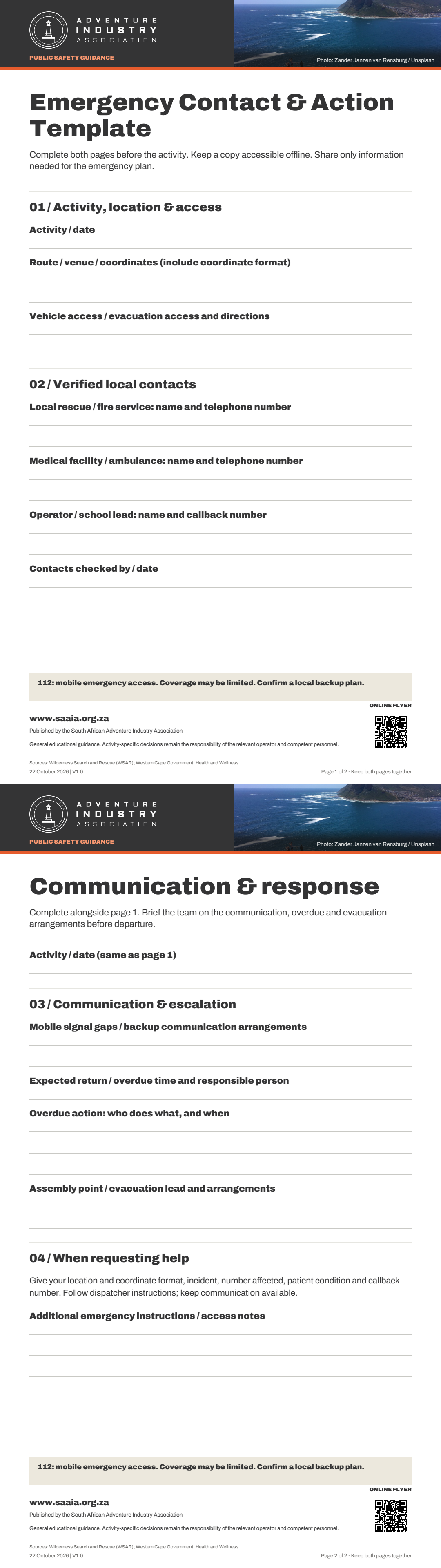
Save relevant local rescue and emergency contacts before you go. Check mobile signal limitations and agree a backup communication plan.

112Mobile emergency access
South Africa
Source-checked 22 Oct 2026
  • Share your route, return time and overdue action with an appropriate contact.
  • Know evacuation routes, access points and who will take the lead.
  • Carry the navigation, communication and emergency equipment appropriate to the activity.
  • When requesting help: give location and coordinate format, incident, number affected, patient condition and callback number.
Emergency Contact & Action Template ↗ (opens in a new tab)

112 confirmed in Western Cape Government guidance (opens in a new tab) on 22 October 2026; not test-called. Coverage and connection are not guaranteed. Local contacts should be verified for the area. WSAR emergency guidance (opens in a new tab).

05 Download. Print. Pass it on.

Free Safety
Resources to Share

Practical information for guides, operators, schools and adventure participants.

Showing all 9 resources · A4 PDF + portrait PNG

Made to be useful. Flyers and templates open in a new tab, where you can save or print them. Send portrait PNGs by WhatsApp or email. Print the A4 PDFs for reception, briefings or school preparation. Scan the QR code on any flyer to open SA AIA’s online digital flyer (opens in a new tab). All nine resources are available in both formats. The emergency template is a two-page A4 worksheet; its PNG includes both pages in one scrolling image. Download the complete pack (ZIP) ↓

Guide-to-client communication

The right words,
ready to share.

A clear explanation helps everyone understand the plan.

Copy a message and replace every bracketed placeholder before sending. Only describe conditions you have assessed. Add your actual arrangements and applicable booking terms.

The messages are drafts for adaptation. Nothing is sent from this website.

Early departure notice

Hi [Guest Name], we're looking forward to [Activity] on [Date]. Please arrive at [Meeting Time] at [Meeting Point]. We have adjusted the start time to help schedule the more demanding part in cooler conditions and allow time for breaks. Please follow the kit list and let us know about any relevant needs. Contact us if the new time creates a difficulty. [Operator Name]

Hot-weather preparation reminder

Getting ready for [Activity] on [Date]? Please bring the drinking water agreed with us, a sun hat, sunscreen, suitable clothing and footwear, food and personal medication. Check our kit list for any extra equipment or layers. Tell us privately about relevant medical or support needs, and speak up early if you feel unwell. See you at [Meeting Time]! [Operator Name]

Route or itinerary adjustment

Hi [Guest Name], we are adjusting [Activity] on [Date] from [Original Plan] to [Revised Plan] because of [Reason Assessed by Operator]. This adjustment follows our assessment of conditions and the group's needs. Please [Updated Preparation Instructions]. We will explain the plan at the briefing; contact us with any questions. [Operator Name]

Postponement or cancellation

Hi [Guest Name], following our assessment of [Reason Assessed by Operator], we cannot safely proceed with [Activity] as planned on [Date]. We know this is disappointing. [Contact Person] will explain the available next steps and the booking terms that apply to your reservation. Please contact [Contact Details] so we can help you with the arrangements. [Operator Name]

Youth and school trip preparation notice

Dear [School / Parent / Carer], for [Trip / Activity] on [Date], please follow the supplied kit list, including a sun hat, protective clothing, sunscreen, a refillable water bottle and suitable footwear. We have planned water access, suitable breaks and shade arrangements and will adjust activities as needed. Share relevant medical, medication or additional support needs privately with [Contact Person] by [Date]. Please check the agreed school and venue arrangements. [Operator Name]

Read further / Check the evidence

Sources, openly shared.

Scientific context, seasonal forecasts and practical recommendations serve different purposes.

All sources below were accessed on 22 October 2026. Forecast publication dates are stated separately. External source links open in a new tab and require a connection. SA AIA's checklists and communication prompts are practical educational recommendations, not statutory standards.

Science & seasonal outlook

  1. NOAA Climate Prediction CenterENSO Diagnostic Discussion ↗ (opens in a new tab)8 October 2026

    Official bulletin read directly on 22 October 2026. Reports strengthening El Niño, with strong-to-very strong conditions likely through January–March 2027. This rolling URL changes monthly; check issue date.

  2. South African Department of AgricultureAgriculture on El Nino weather climate ↗ (opens in a new tab)2 September 2026

    Government advisory summarising SAWS Seasonal Climate Watch issued 31 August 2026. Local seasonal context; not represented as the latest SAWS bulletin.

  3. South African Weather ServiceOfficial forecasts and warnings ↗ (opens in a new tab)Continuously updated; check displayed issue time

    External live service. This resource does not fetch or display live warnings. The SAWS app shell was reachable; its latest local seasonal PDF was not independently retrieved.

  4. NOAAUnderstanding El Niño & ENSO ↗ (opens in a new tab)Undated explainer; accessed 22 October 2026

    Ocean–atmosphere coupling, trade winds, tropical rainfall and global influence.

  5. NOAA Climate Prediction CenterEl Niño Temperature and Precipitation Patterns ↗ (opens in a new tab)Last modified 19 December 2005

    Typical seasonal patterns, not a current forecast or attribution of individual events.

  6. NASA Earth ScienceEl Niño ↗ (opens in a new tab)Undated explainer; accessed 22 October 2026

    Distinguishes natural ENSO variability from climate change.

Practical safety & emergency guidance

  1. CDC / NIOSHHeat-related Illnesses ↗ (opens in a new tab)Reviewed 3 March 2026

    Heat illness signs and first response. US emergency numbers are replaced here with verified South African mobile access.

  2. American Heart Association / American Red Cross2024 Guidelines for First Aid ↗ (opens in a new tab)2024

    Heatstroke: activate emergency services and begin rapid cooling; safe, supervised immersion where feasible.

  3. NHSHeat exhaustion and heatstroke ↗ (opens in a new tab)Review date not displayed in retrieved extract; accessed 22 October 2026

    Public recognition and cooling guidance. Emergency signs require immediate action, not a waiting period.

  4. NHSDehydration ↗ (opens in a new tab)Reviewed 1 May 2026

    Fluid loss, warning signs and escalation.

  5. NHSSunburn ↗ (opens in a new tab)Reviewed 24 November 2025

    Skin damage, cooling and when to seek medical advice.

  6. NHSHypothermia ↗ (opens in a new tab)Reviewed 9 June 2023; source review was due June 2026

    Cold exposure signs and initial shelter/warming measures. Recheck for updates before publication.

  7. Western Cape Government, Health and WellnessKnow who you can call in an emergency ↗ (opens in a new tab)Undated; numbers verified online 22 October 2026

    Confirms 112 mobile emergency access and 10177 ambulance. Numbers checked against a published official source, not test-called.

  8. Wilderness Search and Rescue (WSAR)Safety outdoors ↗ (opens in a new tab)Page update metadata: 4 February 2026

    Planning, equipment, communications and changing mountain conditions. No universal water quantity is adopted here.

  9. Wilderness Search and Rescue (WSAR)In case of an emergency ↗ (opens in a new tab)Page update metadata: 25 February 2019

    Location, incident, patient and callback information for a rescue request. Not used as evidence of historical rescue totals.

  10. South African National ParksSafe Hiking — Table Mountain National Park ↗ (opens in a new tab)Undated; accessed 22 October 2026

    Rapidly changing weather and appropriate preparation. Local rules should be checked with the relevant park.

  11. National Disaster Management CentreNational disaster management resources ↗ (opens in a new tab)Undated; accessed 22 October 2026

    Official national information entry point. An indexed weather-precautions PDF returned HTTP 404 during final link checks and has been removed from public links.

  12. CapeNatureFire management ↗ (opens in a new tab)Undated; accessed 22 October 2026

    Provincial conservation authority: hot, dry, windy conditions, ignition prevention and prompt reporting. Local restrictions must still be confirmed.

Institutional context

  1. SA AIAOutdoor Education & School Trip Safety ↗ (opens in a new tab)Undated; accessed 22 October 2026

    SA AIA guidance for schools and parents on provider evidence, allocation of responsibilities, membership and voluntary service-provider verification. Linked for this specific context; no claim of statutory authority is made.

  2. SABS / ISOSANS 31031:2025 / ISO 31031:2024 — Managing risk for youth and school trips ↗ (opens in a new tab)SANS edition 1, 2025; ISO edition 1, 2024; terminology checked 22 October 2026

    Terminology reference for youth and school trips. The supplied SANS document identifies itself as an identical implementation of ISO 31031:2024. This reference does not assert compliance or certification of this guidance or any trip.

Select and copy

Your browser could not copy automatically. Select the text below and use your device's copy command.